





Fibremaxxing is a wellness trend that encourages you to eat as much dietary fibre as possible – often dramatically exceeding the recommended daily intake of 30g.
It’s the latest thing in health and wellness, appearing on social media feeds everywhere, and inspired by research showing the importance of fibre intake for gut health, weight management, a reduced risk of chronic diseases and many other benefits.
Fibremaxxers advocate eating many more fruit and vegetables, nuts, seeds, whole grains, legumes, and fibre powders, with the promise of benefits like better digestion, feeling fuller for longer, enhanced energy levels, and detoxification.
People who are passionate about fibremaxxing will track the grams of fibre in every meal, go for fibre-enriched foods, or even take fibre supplements, with the aim of consuming 40-50 grams of fibre a day or more.
Do you really need to fibremaxx?
Most of us would definitely benefit from eating more fibre.
The National Diet and Nutrition Survey shows that 90 per cent of UK adults are only getting about 20g of fibre a day, on average, well below the recommended daily target of 30g. Children aged 11 to 16 need about 25g a day but only get around 16g.
But the effects of the extreme amounts often advocated by fibremaxxers haven’t been researched yet. Suddenly eating large amounts of fibre at once or in one meal could backfire, causing bloating, gas, cramping, or constipation.
Extreme amounts could even reduce absorption of minerals like calcium, iron, magnesium, and zinc. It's also likely to worsen symptoms if you have a gastrointestinal condition such as IBS or Crohn’s disease.
There’s no reason to believe that an overwhelming focus on ‘maxxing’ your dietary fibre is a better alternative to a healthy lifestyle with regular exercise, hydration, and a balanced, high-fibre diet with roughly 30g of fibre a day.
Why is fibre important?
Dietary fibre is a generic term for complex carbohydrates that our stomachs can’t digest. Instead of getting broken down in the gut and absorbed, as happens with simple carbohydrates like sugars, it passes through the digestive system mostly unchanged, adding bulk to stools and promoting regular bowel movements.
But while we lack the enzymes needed to digest fibre, it’s still a primary food source or ‘prebiotic’ for beneficial gut bacteria, which ferment it to produce short-chain fatty acids that give us all kinds of health benefits.
There are two main types of dietary fibre: soluble fibre, which forms a gel in the gut and supports microbiome diversity, and insoluble fibre, which adds bulk to stools and prevents constipation. Both kinds are present in fruits, vegetables and other plant sources and support health in different ways.
What are the health benefits of fibre?
Even just a moderate increase in your fibre intake can improve gut function and reduce the risk of many diseases.
Scientific studies have shown that fibre supports a diverse and thriving gut microbiome, feeding beneficial gut bacteria linked to enhanced immunity, mood, and metabolic health.
Fibre is also essential for healthy digestion and regular bowel movements, helping to prevent common digestive health issues like diverticular disease by keeping stools soft and easy to pass.
A fibre-rich diet is linked to a lower risk of heart disease, type 2 diabetes, and colon cancers.
Fibre plays a role in detoxification by helping remove waste and bile acids from the body. It supports healthy ageing by reducing inflammation and the risk of developing serious chronic diseases.
Fibre helps manage a healthy weight by increasing feelings of fullness and slowing the absorption of sugar, improving blood glucose control. It also helps regulate cholesterol by binding cholesterol particles in the gut.
Fibre can also improve gut barrier function, contributes to nutrient absorption, and can even influence mental health, as gut bacteria can affect mood and cognition.
What are good sources of fibre?
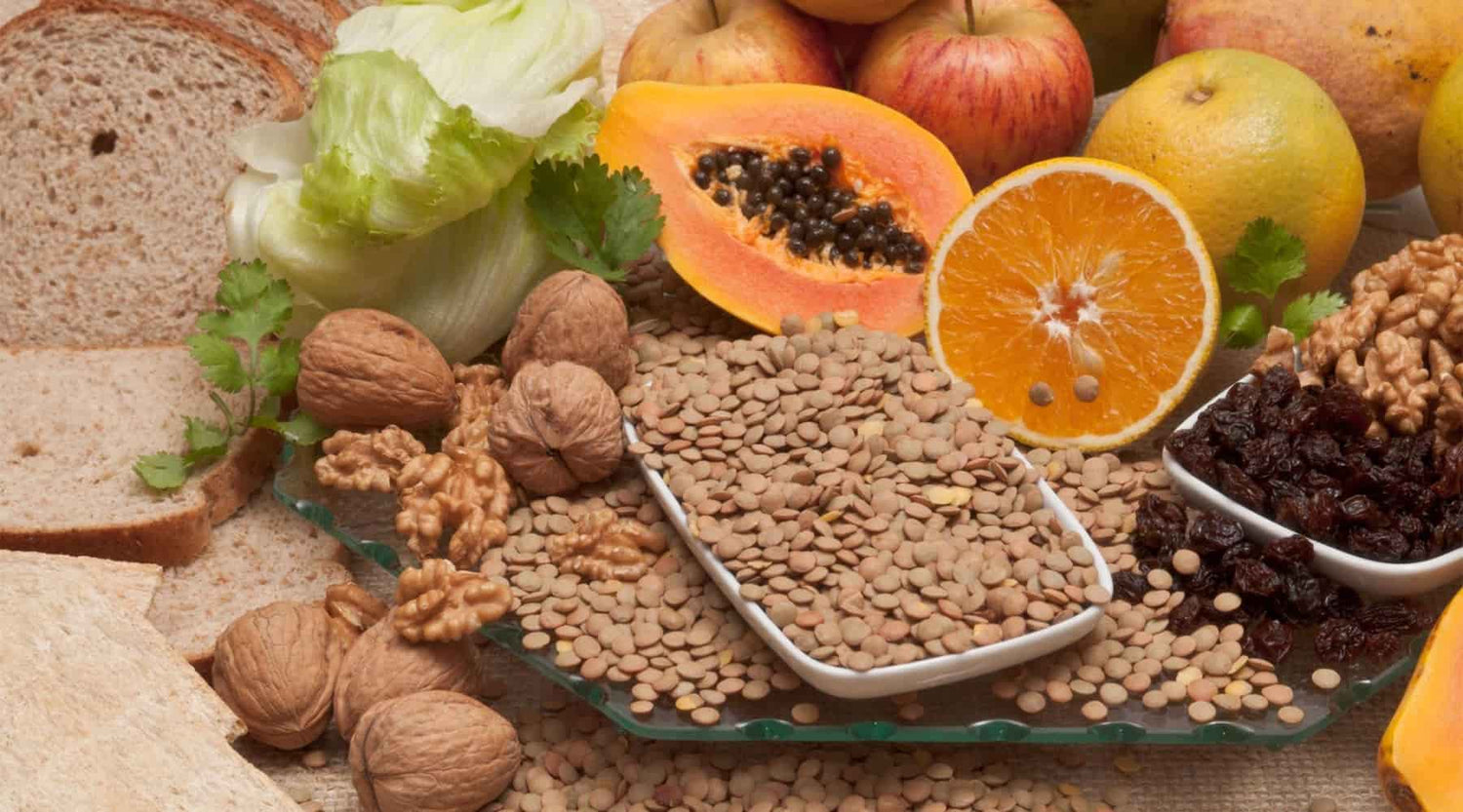
Plant foods – vegetables, fruits, legumes, nuts, seeds, and whole grains – are all good sources of fibre.
Vegetables such as broccoli, carrots, and Brussels sprouts are particularly fibre-rich, and leaving the skins on ensures maximum intake.
Fruits including apples, pears, berries, and oranges provide both soluble and insoluble fibre – include seeds where you can for even more.
Legumes like lentils, chickpeas, and beans are excellent fibre sources, and provide protein and slow-release carbohydrates, keeping energy levels steady.
Whole grains like oats, brown rice, barley, and wholemeal bread are also key daily contributors, while nuts and seeds, including almonds, chia, flax, and sunflower seeds, add fibre along with healthy fats.
Eating a diverse range of fibre sources is important because different fibres feed different gut bacteria. Just snacking on high-fibre options like popcorn, unsalted nuts, or raw vegetables can help meet daily targets.
It’s a good idea to drink plenty of fluids along with a fibre-rich diet to avoid digestive discomfort. Gradually increasing your fibre intake allows the gut to adapt and improves tolerance.
What does 30g of fibre a day look like?
1 apple – 4g
1 orange – 3g
50g of rolled oats – 4.5g
A thick slice of brown bread – 2g
Half a can of lentils – 6g
75g of wholemeal pasta – 6.5g
Medium jacket potato with skin – 4-5g
Two carrots – 6g
Balancing beats maxxing
Most of us could do with getting more fibre into our daily diets. But gradually increasing your intake to roughly 30g a day, along with plenty of water, is a better approach than ‘maxxing’ out.
Dr Miriam Ferrer, PhD, is the Head of Product Development at FutureYou Cambridge.







Leave a comment
All comments are moderated before being published.
This site is protected by hCaptcha and the hCaptcha Privacy Policy and Terms of Service apply.