






Read time: 5 minutes | Written by: FutureYou Health Team | Reviewed by: Dr Miriam Ferrer, Head of Product Development
Key takeaways: Vitamin B12 and peripheral nerve health
Myelin sheath protection: Vitamin B12 (cobalamin) is essential for maintaining a healthy nervous system, including the myelin sheath, the protective insulation surrounding many nerve fibres in your hands, feet and throughout the body.
Causes of pins and needles: Recurrent tingling, pins and needles or numbness are common symptoms of vitamin B12 deficiency. If the body doesn’t have sufficient levels of B12, it can’t make enough myelin sheath protection for your nerves – a bit like a cable losing the plastic coating that protects its inner wires.
Absorption difficulties: Age-related changes in digestion and some medications, such as metformin and proton pump inhibitors (PPIs), can increase the risk of vitamin B12 deficiency.
Bioavailable Active B12: Restoring nerve pathways after a confirmed B12 deficiency may require oral supplementation with active coenzyme forms like methylcobalamin, to bypass age-related digestive barriers to absorption – or injections, depending on the cause and severity.
What causes tingling, pins and needles, and numbness in hands and feet?
Experiencing recurrent pins and needles, tingling or numbness in your fingers, toes, hands or feet is clinically known as paraesthesia1. While temporary tingling can happen when prolonged pressure restricts blood flow to a limb, persistent paraesthesia is often an early sign that your peripheral nerve fibres are under strain1.
Your peripheral nervous system acts as an electrical network, carrying messages between your brain, spinal cord and the rest of your body. Many nerve fibres are coated in a fatty insulating layer called the myelin sheath, which helps electrical signals travel efficiently2.
How vitamin B12 helps maintain healthy nerves
Keeping nerves insulated: Think of vitamin B12 as an essential building tool. It helps your body create the natural fats needed to build and repair the myelin sheath, the protective insulation around your nerves2.
Stopping Signal Leaks: If you don't have enough B12, this natural repair process slows down. Just like a frayed electrical wire, the protective nerve coating can wear thin, causing nerve signals to "leak". This is what often triggers uncomfortable feelings of burning, tingling, or numbness in your hands and feet1, 2.
Teamwork for healthy blood flow: Vitamin B12 works alongside Vitamin B6 and Folate (B9). Together, they help manage a specific chemical in your blood that, if levels get too high, can irritate the blood vessels supplying your nerve tissue2.
To learn more about B vitamins and how they can support different aspects of your health, read our guide: What are the benefits of taking vitamin B?
Why vitamin B12 absorption can become more difficult after 50
Low vitamin B12 levels aren't always just about what you eat. It’s often a simple absorption issue that becomes more common as we age or take certain medications1, 3.
Normally, your stomach acid has to work hard to separate B12 from the food you eat3, and a special protein (called intrinsic factor) then helps carry it into your bloodstream for absorption1. But over time, this process can slow down.
Common barriers to vitamin B12 absorption
Getting Older: Past the age of 40, our stomachs naturally produce less of the acid and special proteins needed to unlock B12 from our meals1.
Medications like Metformin: Commonly used to help manage blood sugar, these can gradually interfere with how your gut absorbs B12, lowering your levels over time3.
Antacids & Heartburn Relief (PPIs): Medications that reduce stomach acid also reduce your body's ability to break down food and release the B12 hidden inside3.
What if you aren't getting enough vitamin B12?
Vitamin B12 supplements and some multivitamins can help address some causes of low intake or absorption. Choosing a highly absorbable, or more bioavailable, form of B12 allows your body to recognise and use it straight away to support nerve health. Methylcobalamin is one of the biologically active forms of vitamin B12, one that your body naturally uses.
People with persistent tingling or pins and needles may need much higher doses via vitamin B12 injections or a prescribed high-dose oral treatment. The form and dose should be selected according to clinical need by a medical professional.
If you're concerned about low B12 levels, particularly if you have persistent tingling or numbness, speak to your GP about appropriate testing and treatment.
Explore our bioavailable Vitamin B collection to support daily nerve health and cellular energy. For overall daily maintenance, our Advanced Multi+ provides comprehensive micronutrient coverage tailored for 50+ health needs.
Nutritional support

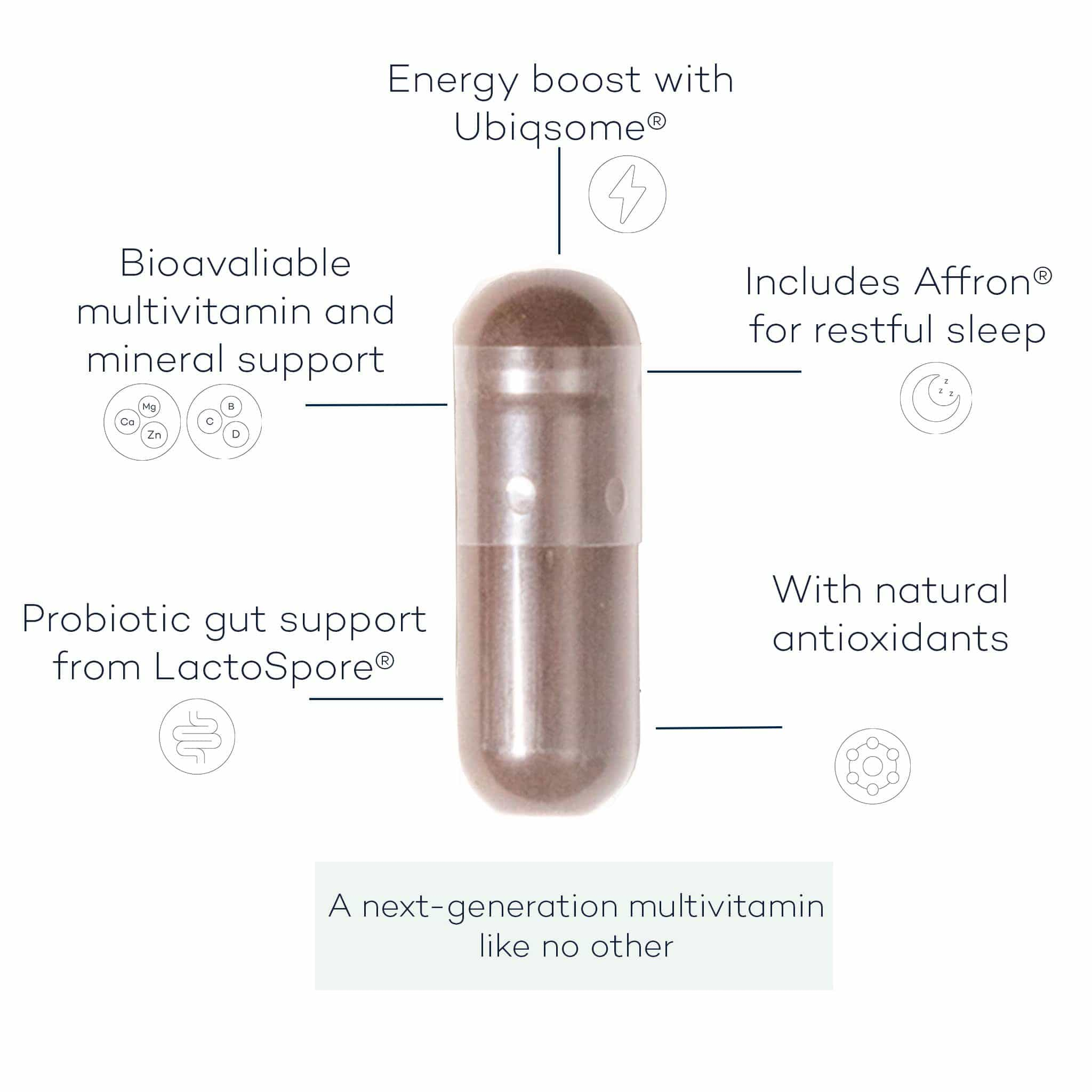
More than your everyday multivitamin. Advanced Multi+ combines 23 carefully selected ingredients, including eight specialist ingredients backed by 52 human clinical studies involving over 4,000 people. A science-led approach to supporting your everyday health.
See how it worksDr Miriam Ferrer's expert perspective
“Vitamin B12 is important for healthy nerve function, and supplementation is worth considering if you’re looking to maintain healthy levels, especially if you have a plant-based diet, or as vitamin absorption can become more challenging with age.
As we get older, our bodies naturally produce less stomach acid, which can create a major absorption bottleneck for some vitamins, including B12. This means that even if you eat a perfectly balanced diet, your body can still struggle to absorb enough B12.
While daily B12 supplements can deliver regular daily support, treating a diagnosed B12 deficiency often requires a much higher dose. If you’re experiencing persistent pins and needles, tingling or numbness in your fingers, toes, hands or feet, do talk to your doctor about a proper medical assessment.”
Frequently asked questions
1. What does vitamin B12-related nerve tingling feel like?
B12-related nerve tingling often presents as a symmetrical "pins and needles" sensation, burning, or mild numbness in both feet or hands. It feels similar to a limb "waking up" after falling asleep, but persists independently of your body position. However, these sensations have many possible causes, so they cannot be used to diagnose B12 deficiency on their own.
2. Can nerve tingling caused by low B12 be reversed?
Yes. When caught early, peripheral nerves can repair their myelin sheath once systemic B12 levels are restored.
3. How long does it take for B12 treatment to improve tingling?
People starting vitamin B12 replacement treatment for B12 deficiency under medical supervision may start to notice improvements in their symptoms within two weeks to three months, depending on the cause and their response to treatment.
4. Why do metformin and heartburn medications (PPIs) lower B12 levels?
Metformin blocks B12 receptors in the lower intestine, while PPIs reduce stomach acid needed to release B12 from food. Both create an absorption barrier, making daily supplemental B12 essential for long-term users. If you are taking long-term medication, you should always check with your doctor before starting a new supplement.
5. Should I take a standalone B12 supplement or a complete B complex?
That depends on your nutritional needs. A B complex provides several B vitamins that contribute to normal functions throughout the body. For example, B12 works together with vitamin B6 and folate (B9) to keep homocysteine levels balanced and support healthy blood circulation. However, if you have a diagnosed vitamin B12 deficiency, a general B complex may not provide the dose required for treatment. If you’re concerned, talk to your GP or qualified healthcare professional whether a specific B12 treatment is needed.
Summary: Why vitamin B12 matters for nerve health
Vitamin B12 is essential for maintaining a healthy nervous system, and deficiency can sometimes contribute to tingling, numbness and other neurological symptoms.
Absorption difficulties, certain medications and inadequate dietary intake can all increase the risk of deficiency.
If you're regularly experiencing persistent tingling or numbness in your hands or feet, it's always best to consult your GP. Identifying the underlying cause early can make a significant difference to treatment and recovery.
References
- Stabler SP. Clinical practice. Vitamin B12 deficiency. N Engl J Med. 2013;368(2):149–160.
- Calderón-Ospina CA, et al. B Vitamins in the nervous system: Biochemical modes of action. CNS Neurosci Ther. 2020;26(1):5–13.
- Miller JW. Proton pump inhibitors, metformin, and vitamin B-12 deficiency. Adv Nutr. 2018;9(4):511S–518S.








Leave a comment
All comments are moderated before being published.
This site is protected by hCaptcha and the hCaptcha Privacy Policy and Terms of Service apply.